Tuesday, January 04, 2011

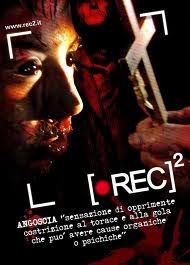
REC2


Having viewed and reviewed REC, this review would fittingly build on the questions asked in the former--the question on intent.

Seeing REC2 as the expansion of the narrative of REC, the question on intention of the film makers regarding the initial stated explanation of the virus as that which caused demonic possession or symptoms therefore was answered with a big fat 'YES' which is both a good thing and a bad thing in my opinion. The YES answer is a bad thing in that this would make the premise crumble in the face of facts in our world (beyond the world of the narrative) and would make the leap in logic fall apart. The good thing about this answer though is that finally the noted ambivalence and ambiguity observed in the first film (is it that we have science to explain the religious or the religious to guide us as we wade through the possibilities of science?) is answered--that they have chosen the route of science explaining away the religious by affirming the initial explanation of demonic possession as some strain or virus in the human DNA.

The choice finally gives the film a strong footing, strong enough to entertain the fancies of those who felt the first left the religious part of the phenomenon too much in favor of their scientific inclination with the inclusion of a new central protagonist, the priest disguised as a medical rescue doctor, exploring the religious implications of the outbreak. Noted in this success is the mindblowing scene of having the priest demonstrate the spiritual nature of the virus by pointing a crucifix directly in close proximity to an infected blood sample on a petri dish which causes the liquid to boil in reswponse to the presence of the holy icon and finally burst into wild flames. In that brief scene the film succeeds to appease the audience that felt left out in th first film and was able to further nuance the problem--that although it is established in the narrative that the scientific nature of the problem exists, the spiritual aspect of the phenomenon is still central, making a cool mix, this time a welcome compromise of the two questions.

Compared to the first film, REC2 is such a success both as a rare example of a sequel that beats out the greatness (I hesitate to use the word awesomeness) of the first and as an individual film that stands alone with a much more solid narrative that provides a spiritually and scientifically sound theme.

If REC2 is a sign of how further sequels to the REC story will get better and better, then I cannot wait for the final two films that will serve as both prequel and final sequel to the mythology of REC!


REC


The Spanish horror film REC is indeed a great example of that rare horror film that sweeps the audience up in adrenaline, the thrill and the chills bordering those of action flicks. Perhaps it is indeed this strong element of kinesis that makes REC a great movie, an urgency brought about by the constant movement with barely moments to stop and ponder until the next big one hits. If films were park rides, then REC would be the perfect roller coaster, dipping and turning you over 360 with only a few seconds to resettle your guts back into place before getting driven into another loop.


Beyond the great ride and experience, what is most attractive in REC is what lies at its core--a reflection of a society at a crossroads of choosing between making sense of traditional faith in terms of modern science and navigating modern dilemmas (brought on by science and technology) guided by faith. It is this core that is most interesting, this ambivalence that pervades the narrative that is neither one that sees faith in the eye nor science in its pure cold objectivity and is present in modern-day Spain. Filipino viewers can identify with this issue, not because we put ourselves to the standard of modern Spanish living--a level of modernity the Philippines has yet to arrive at--but we share (indeed we owe it to them) the same deep entrenchment of faith in every aspect of society. Thinking back, it is precisely this ambivalence, this perceived hesitation in choosing which road to take that both drew me in while watching the film and later made me feel quite distant, in that I dislike this move that plays too safely. I thought it was a cheap trick to try to explain away the phenomenon of demon possession as a strain of mutation in the human DNA that could be isolated and cured by modern science, one that does not stand up to logic as previous exorcisms have involved the non-possessed being bitten (or some other way by which body liquids could be transmitted to another) and yet without the news of contamination or the "virus" of possession spreading. This gap in logic, which can never be determined as intended or unintended by the filmmakers unless we get a statement from them, leaves room for the ponderer who watches the film and thinks over the points raised after to consider the 'falseness' or 'wrong' of the first explanation provided--that the spreading virus is one that concerns demon possession. Since previous established exorcisms did not yield a possession that was infectional, then the virus in the film could possibly be wrongly identified as that strain that causes the phenomenon of demon possession, or rather, the effects of demon possession as experienced and manifested by an individual. (Of course, this ambivalence would be answered in the sequel REC2 when they do establish that indeed the virus spreading in the building and its inhabitants is one that is concerned with demonic possession.)

This nuanced consideration though should definitely not take away from the fun that is viewing REC!

The Descent


The Descent is wonderful adventure film akeen to the likes of REC and Splinter whose initial draw is in its action-packed narrative that borders on horror with horrifying situations and elements interspersed. This quality is what made me doubt The Descent's inclusion into the catalogue of films shown in class initially, a doubt which I have in time come to terms with upon reflecting on the images presented in the film.
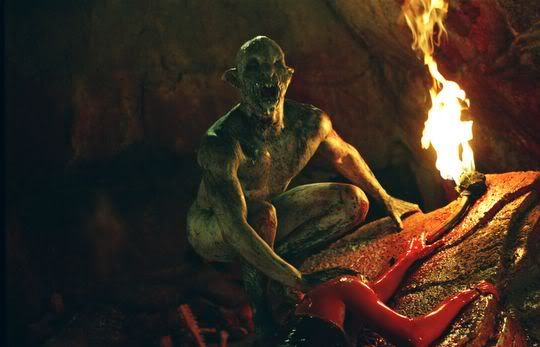
The Descent's portrayal of abjection, from bat poop to a gigantic pool of blood and creature feces, certainly identify it to the horror genre together with the inclusion of humanoid creatures the protagonists stumble upon deep in the cave system. Above these categories however, the remarkable way by which The Descent is a horror film is the source from which the horror and dread comes from--the tension of relations between the completely human and normal female protagonists. The true horror of the film is the raw presentation of the breakdown of a tight group's friendship strained externally by their stressful, dangerous, and hopeless circumstance but more so internally by what each harbors against another in the form of secrets, frustrations, etc. Beyond the lasting images of those horrible cave-dwelling creatures captured on camera by night vision and that one particular shot of one of them actually mounting the main protagonist who remains motionless and calm to ward it off, the most effective and perhaps the most significant horror the film delivers comes in the decision and action of the same main protagonist when finally confronting her former friend whom she discovers had accidentally killed one of their buddies in the cave and have been fooling around with her newly departed husband. In that climactic exchange of words in a flurry as sounds of the creatures draw louder and nearer where they stand, the main protagonist raises her pick-axe and stabs her double-crossing, friend-killing, husband-robbing companion with it. Just the finality, decisiveness, and satisfaction the act brings to the main protagonist is haunting as she leaves her Lara Croft-esque companion behind with a gut-churning smile on her face to offer up to the mercy of the creatures.

The Descent is in one helluva film a creature feature, a feminist approach at portraying the dynamics and complexities of relationships between women, and an action-adventure survival horror flick that satisfies, even with its future-bleak not-so-happy twist ending.

Wishing Corridors 4 - Voice


Voice is an interesting film in the Whispering Corridors film series. Much like every other Korean horror film, it has the trademark "struggling to remember" central plot but unlike the others in the series feels more like an atmospheric memory tragedy dotted with thrilling/suspenseful interludes rather than a true blooded horror flick revolving around a central tragedy. This does not diminish the film's charm or power though as the shift in focus and weight is refreshing given the material and narrative was ably executed and given justice.


The film's portrayal of female relationships offer an interesting nuanced view--one of dependence, obsession, love, lust, mentorship, and manipulation. Some of them might have feminists airing objections over portraying traditional malevolent stereotypes of women-in-power such as the female student using her body/charm as currency to manipulate a professor (albeit also female), the obsessed lover (ala Glenn Close in Fatal Attraction), or the overdependent friend. The redeeming part in these portrayals is the complexity in which they are shown, often juxtaposing two traits in one character (the overdependent friend is actually the manipulative student, etc), giving room for the recognition of the complexity of the woman character.

A really good metaphor utilized in the film is the assertion that memory is connected with the voice, in that the more one forgets, the more one silences that which is gradually forgotten. This metaphor is quite powerful, interesting most especially to me as my thesis for the semester is that of historical revisionism and how the willful revision and forgetting of the truth of the past effectively silences the voices of the victims.

Of the films in the Whispering Corridors series, this is a decent entry though not my favorite (it still is the second film--Memento Mori). It manages to provide glimpses into the complexities of its female characters but never quite pushes the envelope enough, leaving you with the feeling that it could've gone deeper and more into areas in the premise left unexplored by the film.

A Tale of Two Sisters


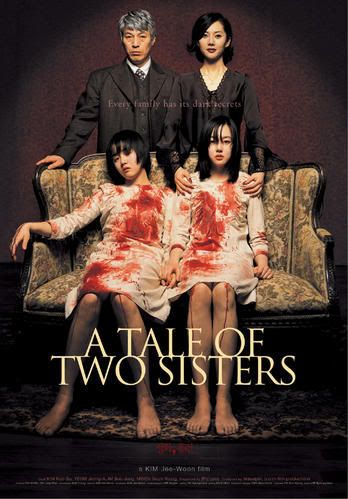
Another South Korean horror film, A Tale of Two Sisters follows the general trend of K-Horror of incorporating the undying memory tragedy. Having seen this film when it came out theatrically in the country (I was so young back then and did not fully understand the nuances and complexities in the plot), viewing it in class again after so many years brought back not only fond memories of seeing it with my father in one of our movie night-outs but also gave me an opportunity to revisit and reassess it.


A Tale of Two Sisters is traditional Korean horror in the sense that it follows and exhibits the greater trend of having a protagonist forget what has happened only to remember it in the climax or resolution of the film but is also refreshing in that it highlights and reveals a nuanced glimpse at contemporary family politics and relations in South Korea. The film being based on old South Korean folklore, the film offers an interesting update where the stock character of the stepmother is followed only to be taken apart in the end with the revelation that all has been in the protagonist's mind. The narrative framing devices compensate for this adherence to South Korean formula and the journey from introduction to exposition to realization to close is made spellbinding by the dynamics of the relationships presented and the tensions that arise from them.

At the heart of the film is an honest portrait of a crumbling family structure who in the face of change gives way to differences. The destruction of established roles of family members and the constant transgression of one character stepping into the roles of another (as revealed later, that the daughter thinks herself to be the stepmother and fashions herself a reanimation of her sister) highlight the horror of the film. Other details presented in the subjectivity of characters' perceptions are left ambiguous enough for the successful and satisfactory final unraveling of truth.

A film that goes under and then beyond the confines of the tradition from which it takes root, A Tale of Two Sisters is a horror film worthy of the critical praise it has been overwhelmingly met with.

Suicide Circle


What the?!?


The thought that book-ended my viewing experience of Suicide Circle.

From the onset, I realized Suicide Circle was a narrative that should not be taken on face value, one that invited pondering, contemplation, reflection, promising a little gem of existential insight, but boy was I wrong. Suicide Circle's episodic and barely coherent narrative presents a style that says quite clearly: "I am a film that wishes you to think! Think about what I have to say! Do not settle for what I show you!" ... but it is precisely this that gets in the way.

For a film to knowingly employ such a style of presentation presupposes that it has a message, a core truth that upon rigorous reflection of the viewer the film will finally award. So it is exactly this spark of truth, this promised insight, that I was aiming for, rather more aptly wading thick contemplating waters for, but alas it was nowhere to be found.

The film aims its message gun at so many targets--the ever-increasing postmodern dilemma of the isolation of man in a sea of men, the lost connection between man and himself, and the presentation of a source most unlikely for wisdom and insight. It aims at them and so many more, pulls the trigger, has bullets flying towards them, only to have them all lose momentum halfway to the target board, falling sadly to the ground after letting gravity pull it down. I personally believe this is what happened with Suicide Circle. It was so promising in that the film was able to lightly touch upon those subjects through the introduction of numerous characters (who in themselves cannot be considered protagonists for the very lack of antagonists in the film, quite postmodern eh?), making the audience anticipate how all these will come together to pull out one giant truth, or, in the least, nuggets of truths. What is served up finally, after the credits roll and the ridiculous J-pop song performed by those ominous children on television, is a big smoking bowl of nothing. Absolutely nothing!

Now some have opined that this nothing, this non-message, is precisely what the film intended, to think for thinking's sake. I find this explanation probable but problematic in that to think for thinking's sake or to do things at all just for the sake of doing them is rather masturbatory in nature, a pattern I am personally wary of because of the lack of direction another activity could have yeilded. To be assaulted by those images, haunted by those ambiguous plot ends, and yet end up with nothing is a waste of time. To have been forced to move only to find out in the end that you haven't moved at all is simply absurd--a thought I find usually accompanying other postmodern films (or films that are feigning to be postmodern).

Splinter


Ouch!, said the porcupine.


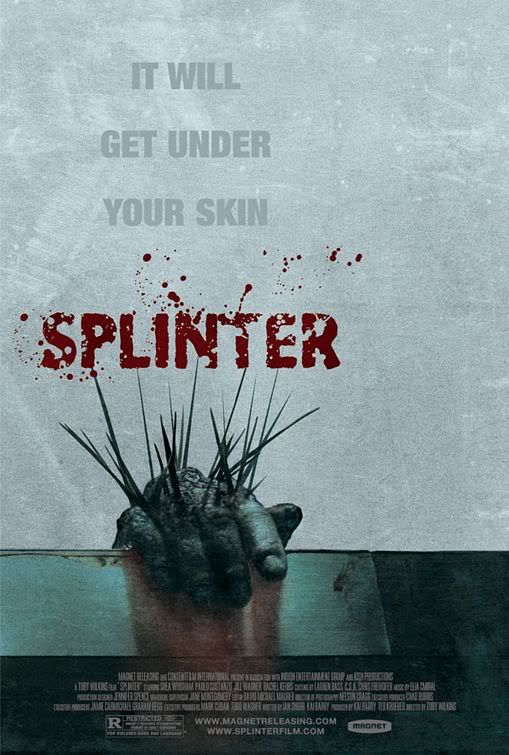
Splinter is the kind of fun movie I'd love to watch on those times that my mind is just asking to be retired for a little while, an entertaining no-brainer. The narrative is quite simple, without the fragmented complexities of Japanese horror films or the non-sequential psychadelic feel of Korean horror, this is American horror entertainment in its purest form. The beauty and affect of spectacle!

Perhaps it was because of this level of non-expectation that I was able to find the film entertaining. I had no prior idea of what the film was about. I haven't heard of any buzz about the film or even any critical reviews, so my experience with it was perhaps one of the few purest ones I've had with viewing a film. Amazing really what being left with only you and the film, without all the other what-he-said or what-they-thought to mess up and color the whole journey, would do to your appreciation of a film.

If I had known what kind of film would be shown in class when we watched Splinter, I would've decided the minute I enetered the CSR that my time would be wasted, that this shallow American gore spectacle would be one of the worst shown in class. Surprisingly though, it wasn't. For a rare moment, as I watched the events unfold in the film and bear witness as the body count rise (rather, the halved body-count rise) I actually understood why American audiences loved gore. (This realization of course would both be reinforced and questioned by the later gorier film The Midnight Meat Train.) I felt the sheer fun of seeing a body torn in half, of that half being integrated to another (rather similar to a lego man-figure being torn apart to switch pants/tops/heads/hands with another lego man-figure), and the newly formed creature going on to search for more parts to absorb. In hindsight, it was my mind being caught unaware, without the shield of automatic critical analysis and nuancing in my head, that I was opened up to this new revelatory experience.

If I will pursue this newfound interest in gore-filled horror is one that I have yet to decide on, but at least now the 'yes' is a possibility.